- My Role
Product design, UX/UI
- Timeline
First release: October 2026
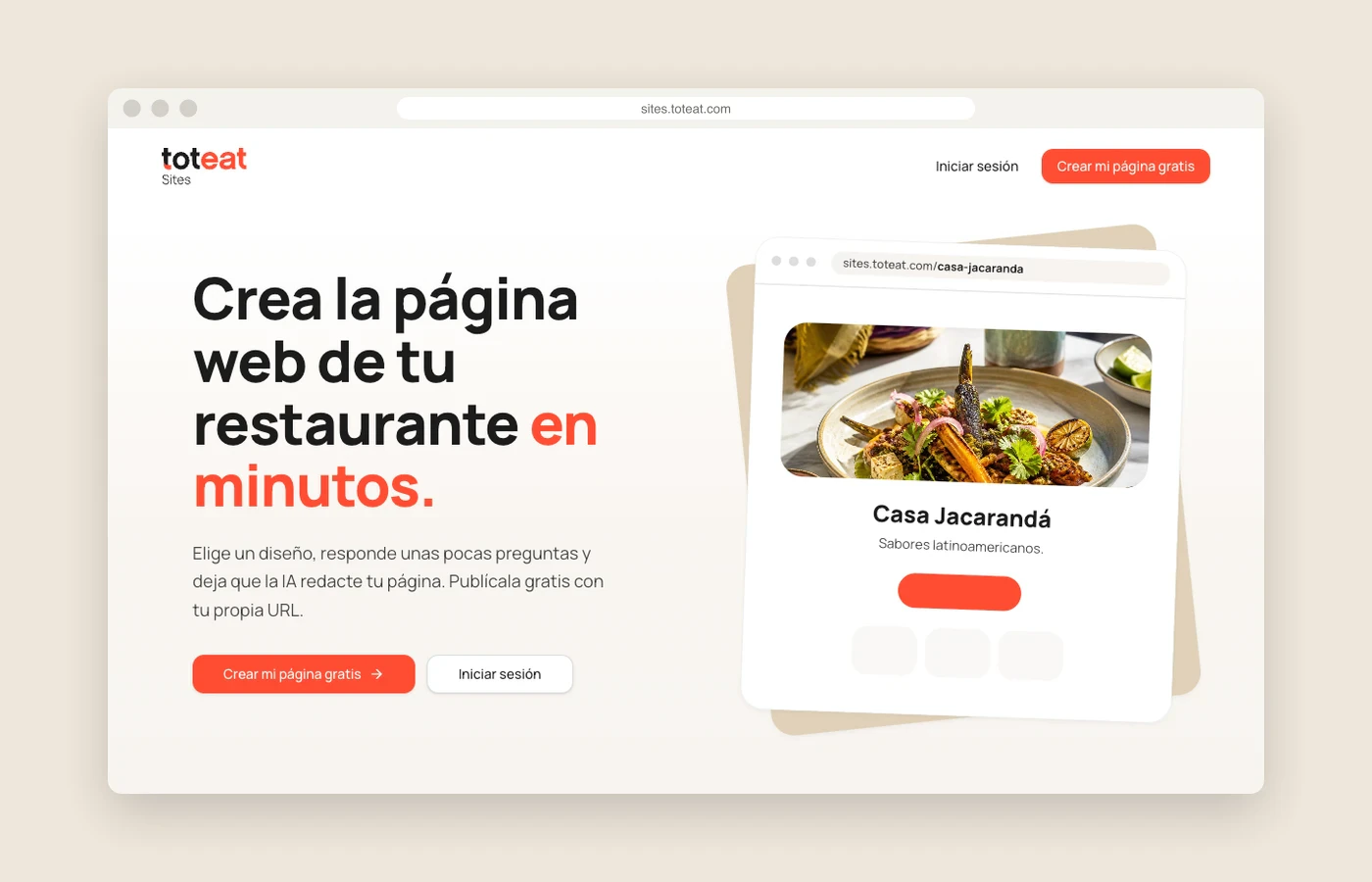
Toteat Sites lets a restaurant owner create a website in minutes. An AI assistant asks a few questions, writes the page, and the owner publishes it for free under their own URL.
The problem
Most new restaurants don’t have a website nor the budget for building one. And, at least in LATAM, they rely on Instagram and WhatsApp. Building a proper page usually means paying an agency or fighting with a generic builder. At that early stage, a POS or management platform like Toteat isn’t on their radar yet. They’re still figuring out the menu, the space, the first customers and even their own style.
The strategy
Toteat Sites is a free resource meant to put the Toteat brand in front of owners and small chains at the very beginning of their journey. The bet is simple: if we help them when they need it most, Toteat is the first name they remember when it’s time to digitize their operation.
It’s also the entry point to Toteat Shop, our paid ecommerce product connected to Toteat’s POS. A restaurant that starts with a free page has a natural next step when it’s ready to sell online.
How it works
- Choose a design. The user picks a layout to start from.
- AI assistant. The owner answers simple questions in a chat, like “What makes your restaurant special?”. The assistant writes the presentation, description and button copy. For example, “Birria tacos and mezcal” becomes “Slow birria, craft mezcal and long, unhurried sobremesas.”
- Own URL. Each page is published at sites.toteat.com/your-restaurant, ready to share on Instagram, WhatsApp or Google.
- Statistics. A simple dashboard shows visits and clicks on WhatsApp, phone or the main button, with no third party trackers.
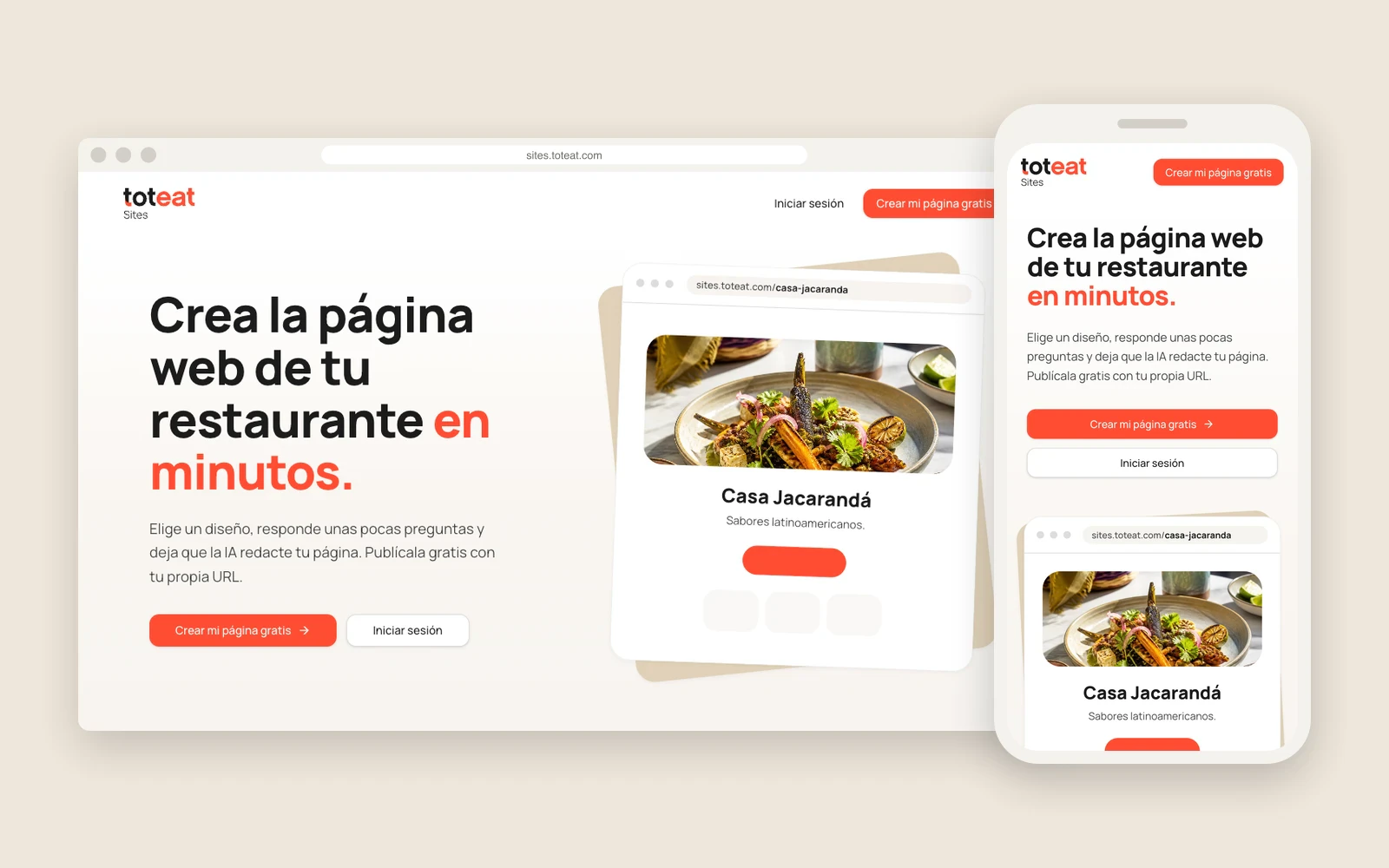
Desktop and mobile
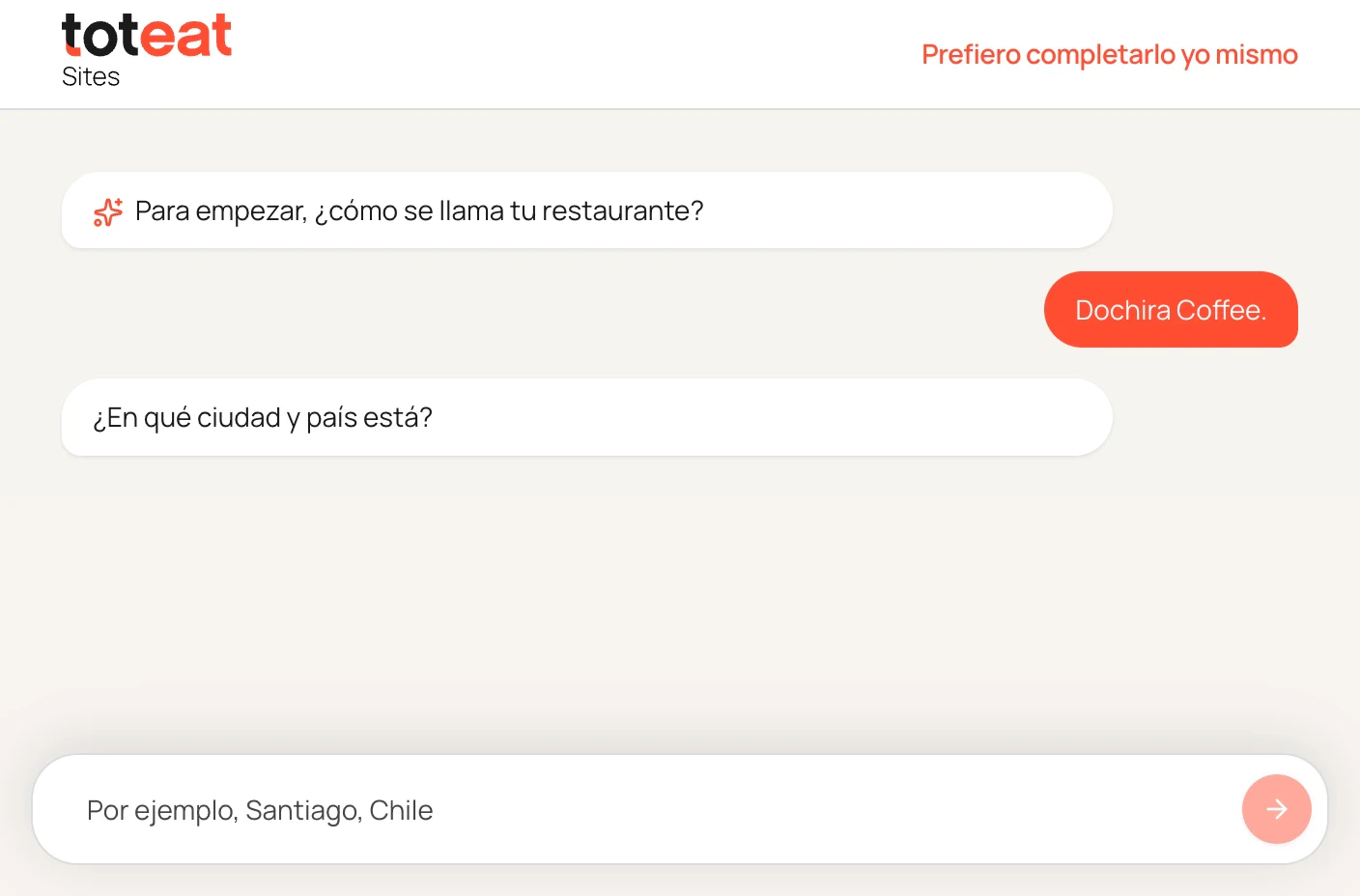
AI chat
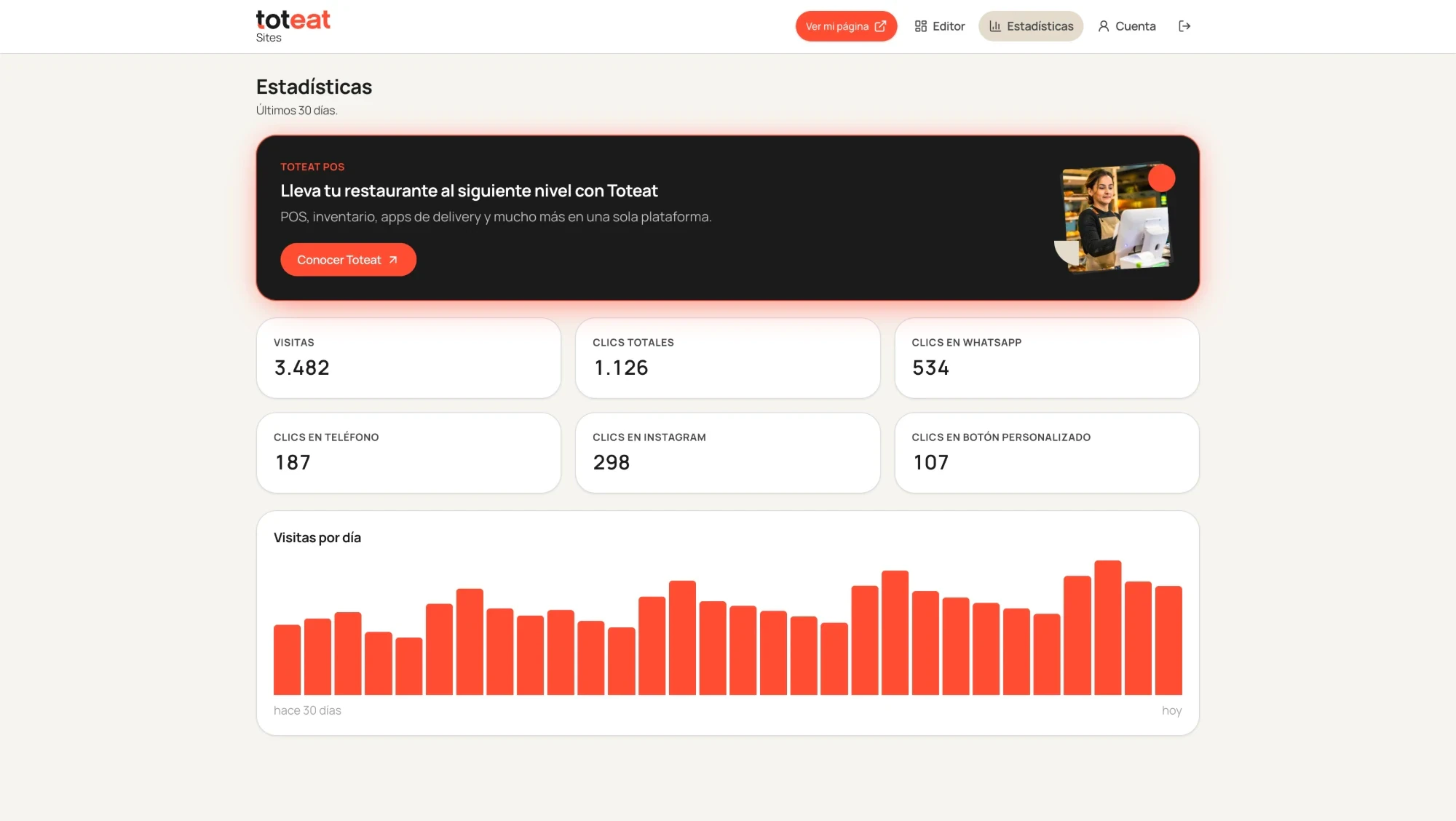
Stats dashboard
The challenge
Our audience is busy restaurant owners, mostly between 30 and 45 years old. They want a website that works; they don’t care about the technical details behind it. So the whole flow had to be something a person with no technical knowledge could finish in minutes: one clear action per step, plain language, and nothing to configure that we could handle for them.
The second challenge was measurement. Owners need to know if their page is bringing in customers, but third party trackers mean cookie banners, slower pages and data we don’t control. Visits and key clicks are measured natively instead.
Colors and design
Built on Toteat’s design system, so every page feels connected to the brand without competing with the restaurant’s own identity.
A note on the build
I prototyped it in Figma and built it in Lovable on top of Toteat’s core design library. It lives under toteat.com as a subdomain, keeping the product inside the Toteat ecosystem. The first version launched in October 2026, and I’m currently automating the main flow and data analytics for marketing.
What’s next
The first version is live, so the next step is learning from real users. I’m tracking four things: how many people finish the flow after signing up, where they drop off, how many published pages turn into conversations with Toteat and how many returning users we have. My first hypothesis is that the AI chat will have to be more robust and proactive with its answers. Is where most friction will show up.