2026
UX, CRO
Lead scoring UX redesign
Research driven redesign of a lead qualification flow, from user pain points to a measurable lift in lead quality.
Our web lead qualification system ran on a single question: Monthly revenue, and it was failing on two fronts. The sales team was wasting time clarifying basic lead information instead of selling, and around 90% of leads gave an inaccurate answer on that one question.
I redesigned the flow into four progressive steps. Lead quality improved by 10% across all five of our markets in the first three months.
The problem
Internally, salespeople circled back to prospects on every deal. The data they received by the leads was thin and often wrong, so the start of each demo went to confirming basic facts instead of selling. That was a huge waste of time for the user and also the sales people.
Externally, about 90% of leads gave an inaccurate answer on the one qualification question we asked. A single question with no friction and no cross-check is easy to fake, so the pipeline filled with leads that did not match their stated profile.
Adding more questions would have reduced conversion. The goal was to capture better signal with less perceived effort, and to catch inaccurate answers without adding an interrogation.
Research
We had recordings of every lead demo meeting. I ran them through Diio, an AI platform that reads and analyzes meetings, and asked it to summarize the full set of client and salesperson interactions.
The attributes that separated serious prospects from the rest matched the BANT framework we already used in marketing (Budget, Authority, Need, Timeline). These were the same dimensions sales probed for manually on every call. That gave us a validated list of what to ask, based on real conversations instead of assumptions, and it defined the questions for the new flow.
Design decisions
The old flow showed every field at once. I split it into four progressive steps to lower cognitive friction, asking for one thing at a time.
Step 1: email
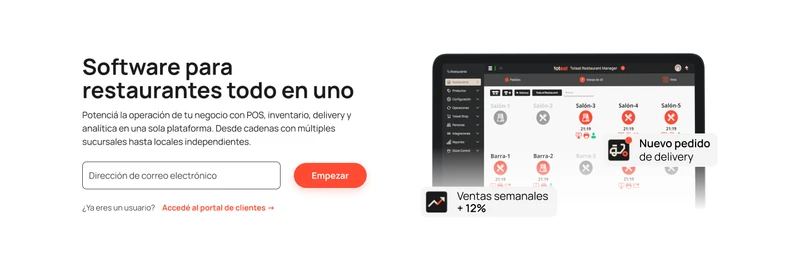
The flow opens asking only for an email address. It captures the lead at the lowest possible barrier, before asking for any real effort.
Step 2: intent filter
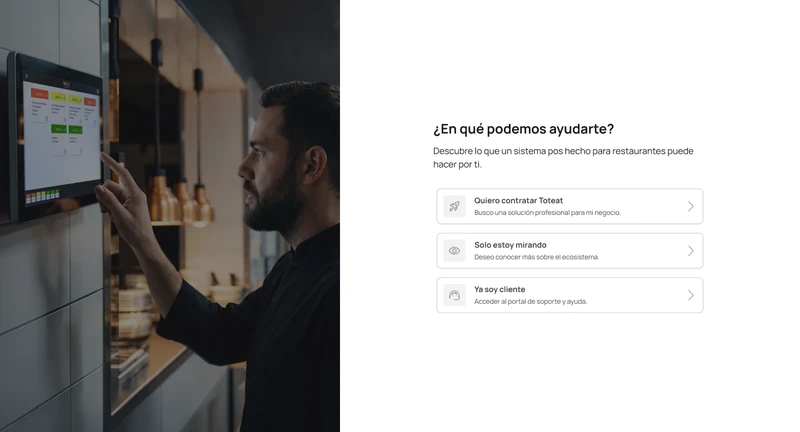
We saw three types of people entering the flow, so we let them self-select: prospects who want to hire Toteat, people exploring the ecosystem, and existing clients who need support. This routes each audience correctly and keeps off-purpose traffic out of the sales pipeline.
Step 3: contact data and consistency check

We collect contact details and ask the prospect about their objective, for example whether they are opening their first location.
Step 4: business dimensions

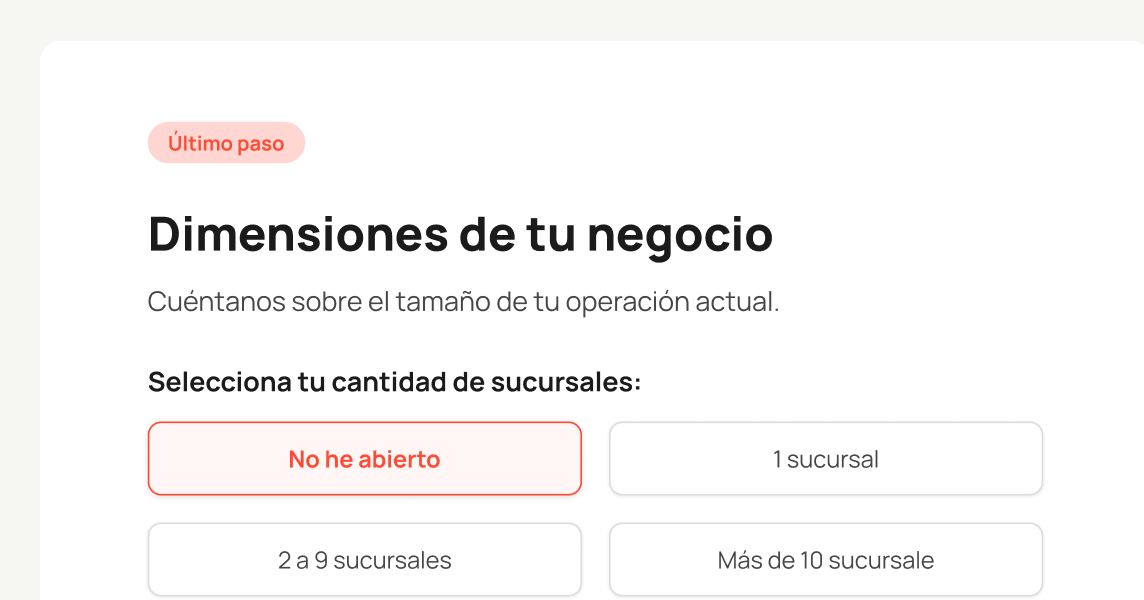
The last step asks about the size and complexity of the operation: number of branches, opening timeline, types of sales, and the prospect's role. These cover the rest of BANT and give sales the operational picture they used to gather by hand.
The objective question in step 3 and the operation size question in step 4 cross-validate each other. If a prospect says their objective is to open their first store, then reports having more than one location a step later, the answers contradict and we deprioritize the lead automatically.
Each discipline converged: marketing defined the signal (BANT), product decided how to capture it without hurting conversion (progressive steps and intent routing), and UX shaped each step to stay light.
Outcomes
After rolling out across all five markets, lead quality, measured as the rate of leads converting to marketing qualified leads, improved by 10% in the first three months. The gain came from structuring the questions and validating each one against real behavior. Sales now spends less time confirming to basic lead data.
What comes next
An hypothesis: if we reduce the number of questions by making the last two steps conversational, powered by AI, lead conversion will increase.
The experience would gather the same BANT signal through dialogue instead of form fields.